Human-Verified
Provenance for AI-generated scientific figures.
The question
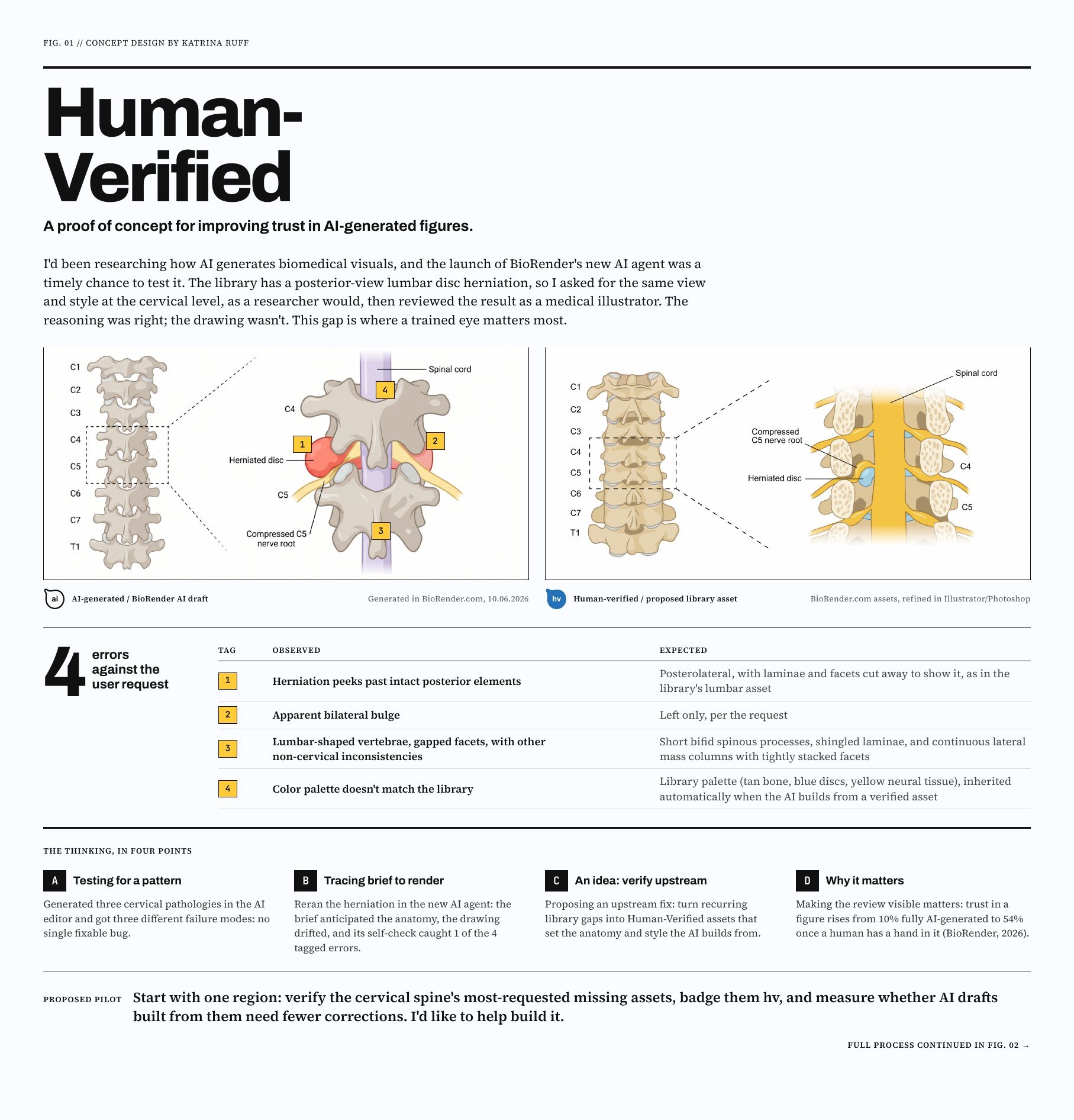
The reasoning was right; the drawing wasn't.
I'd been researching how AI generates biomedical visuals, and the launch of BioRender's new AI agent was a timely chance to test it. The library has a posterior-view lumbar disc herniation, so I asked for the same view and style at the cervical level, as a researcher would, then reviewed the result as a medical illustrator.
What I tested
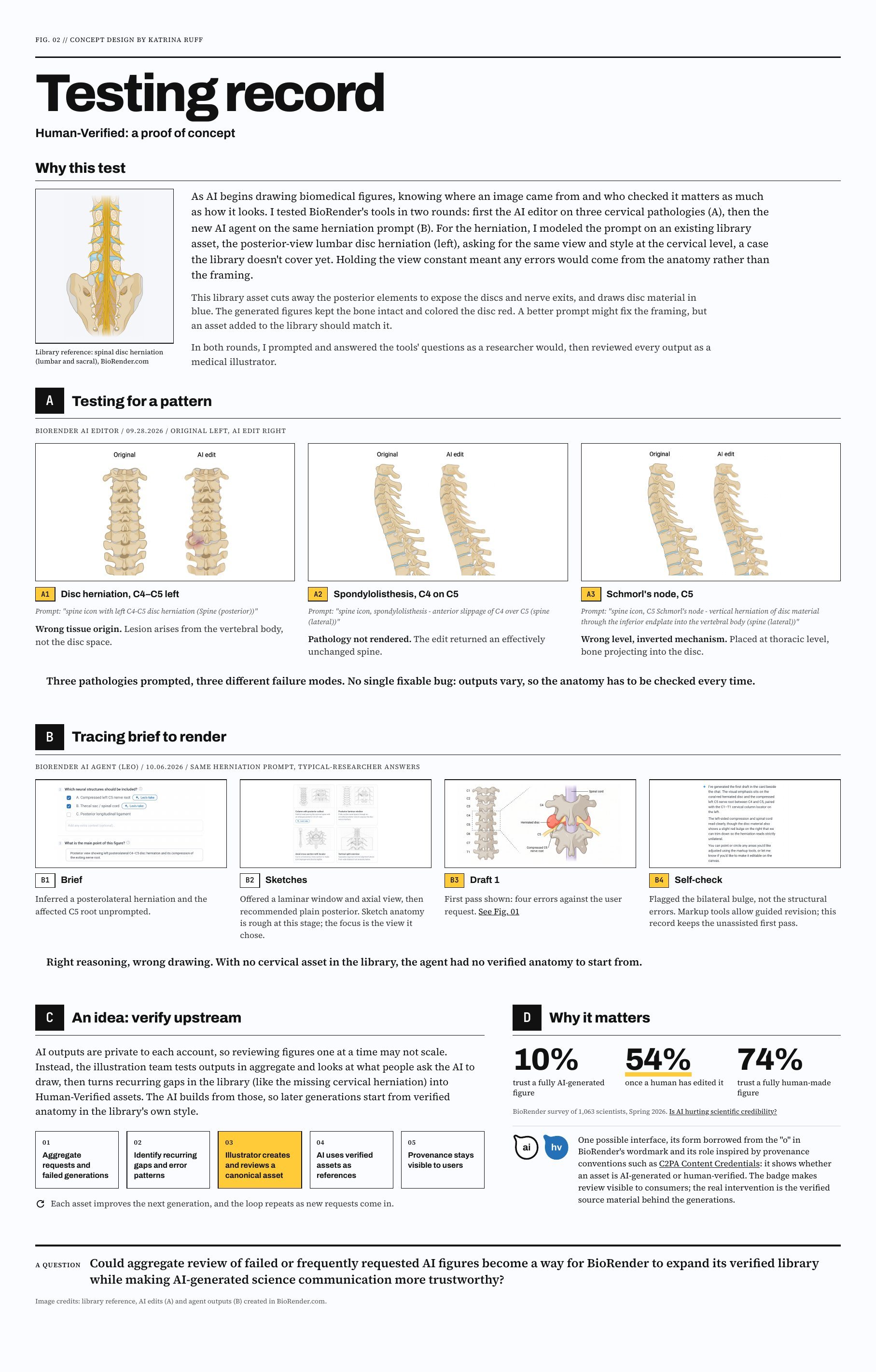
First the AI editor, on three spine pathologies: three different failure modes, so there's no single fixable bug. Then the AI agent, on the herniation prompt alone. Its brief anticipated the anatomy, the drawing drifted, and its self-check caught 1 of the 4 errors I tagged against the request.
The proposal
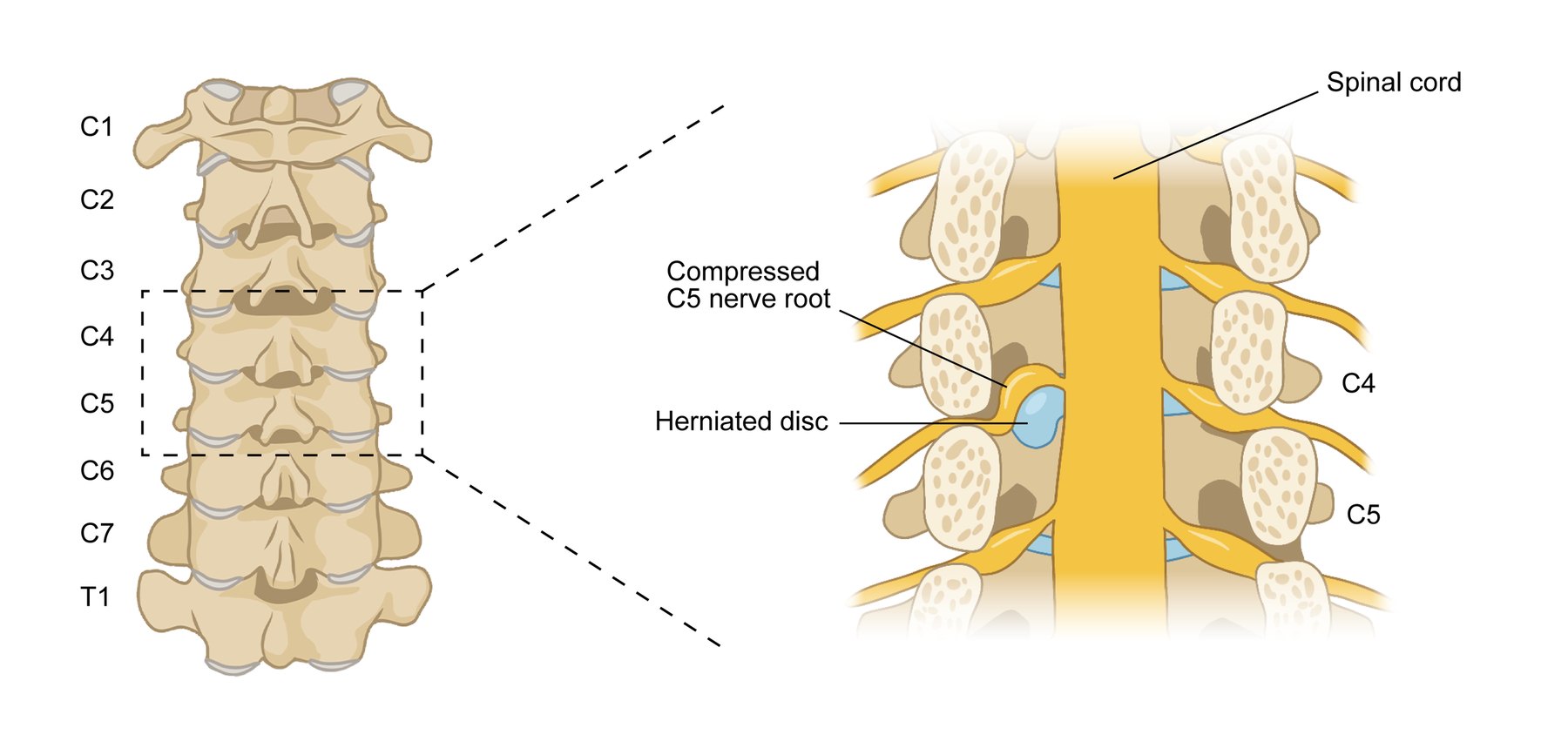
Turn the library's recurring gaps into human-verified assets that AI builds from, so later generations start from checked anatomy in the library's own style. Making that review visible matters: trust in a figure rises from 10% when it's fully AI-generated to 54% once a human has a hand in it (BioRender, 2026).
The pilot: start with one region. Verify the cervical spine's most-requested missing assets, badge them hv, and measure whether AI drafts built from them need fewer corrections.
The figures